 Call us today (707) 246-3646 or ...
What is Kaizen?
The PEAK in PEAK Business Coaching stands for Performance, Efficiency, Abundance and Kaizen. When I founded the company, I considered having the K stand for Knowledge. Even back in 2005 I knew that Knowledge wasn’t as powerful as Kaizen. Applied Knowledge on the other hand is key.
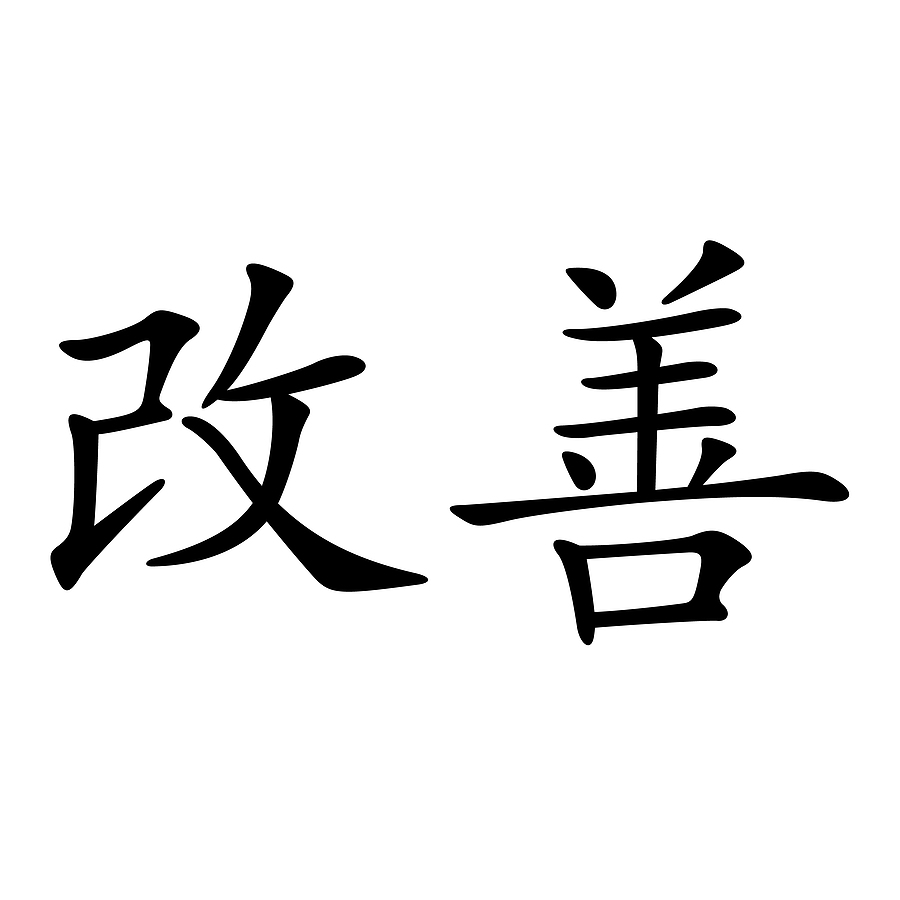
Kaizen is a Japanese word meaning continuous improvement. Broken down, Kai = change and zen = for the better. It’s my life and business philosophy.
The philosophy or process is designed to achieve maximum quality, low waste, high efficiency, high productivity with people, equipment and processes.
The main idea is to make small, positive incremental changes that add up over time to breakthrough major improvements.
Once optimized, maintaining excellence is done through Standard Operating Procedures [SOP’s], training and quality control.
What does it take for Kaizen to succeed?
This is not a temporary fleeting undertaking. It takes commitment to excellence from the CEO, throughout the organization to the line workers. Everyone contributes ideas, pulling from the combined synergistic brain pool of the company or department. This leads to an empowered workforce with high morale, mutual respect and purpose. This is an agreed upon process with cooperation and consensus, not the old hierarchical “because I’m the boss” concept.
Where did Kaizen come from?
Kaizen is similar in concept with Six Sigma (Bill Smith, engineer is credited with the name). Motorola’s case study where they achieved an unheard of 3.4 defects in a million with its pager manufacturing made Six Sigma famous. Other processes also have similarities – Lean Manufacturing (lowering waste and errors), Kaepner Treago rational thought process (I was a black belt with this process back when I worked at Genentech, Inc.), etc…
The Toyota Way is probably the most famous. What is Toyota known for? Reliability. Interestingly, this all originated post WWII when US consultants were sent to Japan to help with re-building their economy. W. Edwards Deming used this process to put QC in the hands of the line workers.
If you really want to get back to the source, read Masaaki Imai’s 1986 book: Kaizen: The Key to Japan’s Competitive Success.
How does Kaizen work?
The simplest model is PLAN -> DO -> CHECK -> ACT
This more detailed ten-step process is credited from https://www.techtarget.com/searcherp/definition/kaizen-or-continuous-improvement
- Let go of assumptions.
- Be proactive about solving problems.
- Don't accept the status quo.
- Let go of perfectionism and take an attitude of iterative, adaptive change.
- Look for solutions as you find mistakes.
- Create an environment in which everyone feels empowered to contribute.
- Don't accept the obvious issue; instead, ask "why" five times to get to the root cause.
- Cull information and opinions from multiple people.
- Use creativity to find low-cost, small improvements.
- Never stop improving.
There is also an 8-step model:
- Get employees involved (subteam)
- Gather a list of relevant important problems
- Encourage and gather solutions – pick one
- Test the potential solution
- Measure and analyze results, graph/plot over time
- If successful, implement solution
- Reward the team
- Repeat …
For more information, case studies and examples, look up Toyota, Lockheed Martin, Ford Motor Company (Alan Mulally, CEO 2006 – took company from brink of bankruptcy to profitable), Pixar Animation Studios.